The Future of B2B: Using AI Automation to Drive Success
The landscape of B2B is shifting as business significantly turn to AI automation for critical benefit. This change promises to enhance efficiency and customer involvement via advanced modern technologies. The assimilation of these tools is not without its obstacles. Recognizing just how services can browse this advancing surface will be crucial for future success. What variables will identify the performance of AI in this market? The responses might redefine typical business designs.
Understanding AI Automation in B2B
As businesses progressively look for efficiency, recognizing AI automation in B2B ends up being essential. AI Automation For B2B. AI automation describes the use of expert system technologies to boost and simplify service processes. In the B2B sector, this involves the integration of AI devices to handle tasks such as information evaluation, customer interactions, and supply chain operations. By leveraging maker discovering and natural language processing, firms can boost accuracy, reduce human mistake, and accelerate decision-making. AI automation facilitates the handling of big volumes of information, allowing services to draw out important understandings and maximize their procedures. As companies browse this technological landscape, an extensive understanding of AI automation's abilities will certainly empower them to stay receptive and affordable to market demands
Secret Benefits of AI Automation for Services
While numerous organizations come to grips with boosting operational demands, AI automation presents countless benefits that can noticeably improve their performance. One considerable benefit is effectiveness; AI systems can do recurring tasks much faster and with better precision than humans, thereby freeing and minimizing errors up workers for more critical initiatives. In addition, AI automation enables data-driven decision-making by analyzing vast datasets swiftly, supplying insights that inform company techniques. Expense reduction is an additional key benefit, as automation reduces labor expenses and maximizes resource appropriation. AI can boost scalability, enabling companies to adjust to market changes promptly. Eventually, the assimilation of AI automation fosters innovation, allowing business to remain affordable in a rapidly progressing landscape.
Changing Consumer Experiences With AI
AI is reshaping customer experiences by improving and allowing individualized interactions involvement. Via the application of anticipating analytics, services can expect consumer needs and preferences, bring about a lot more customized services. In addition, streamlining support processes with AI technology enhances performance and contentment, ultimately changing the total consumer trip.
Customized Communications and Involvement
Predictive Analytics Implementation
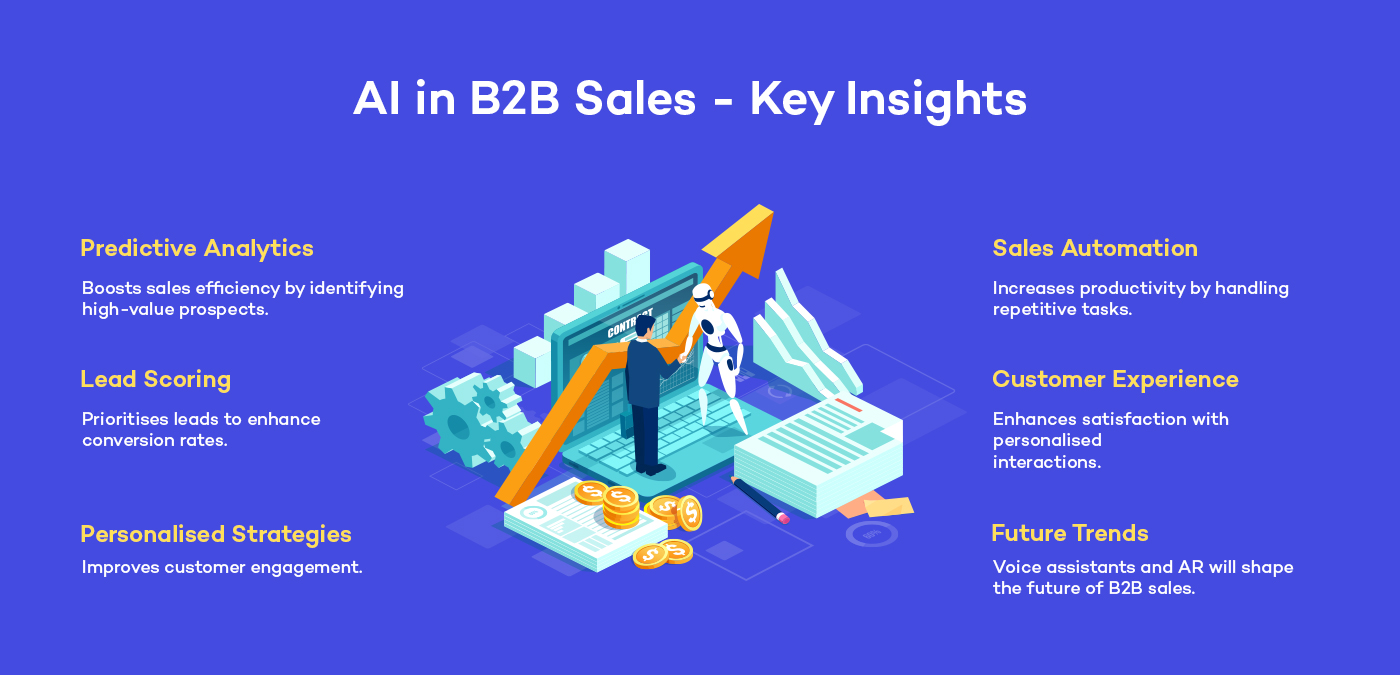
As services increasingly look for to boost consumer experiences, implementing anticipating analytics has become a pivotal strategy in the B2B industry. By leveraging data-driven insights, organizations can prepare for consumer needs and choices, enabling them to tailor their offerings better. Anticipating analytics utilizes sophisticated algorithms and historical information to anticipate future actions, permitting companies to recognize prospective challenges and possibilities. This positive technique not only enhances client contentment but also cultivates loyalty by delivering relevant and timely remedies. Additionally, predictive analytics assists in resource appropriation, making certain that marketing efforts are focused on high-value potential customers. Eventually, the combination of predictive analytics gears up B2B companies with the devices needed to transform customer communications and drive long-term success in a progressively affordable landscape.
Simplifying Support Procedures
Enhancing customer experiences in the B2B sector expands beyond predictive analytics; streamlining support processes plays a crucial role. By integrating AI-driven options, services can automate routine inquiries and improve feedback times, leading to increased client complete satisfaction. Chatbots and virtual aides supply 24/7 support, dealing with client needs promptly and lowering the problem on human agents. This automation enables teams to concentrate on intricate concerns, promoting more purposeful communications. AI tools can analyze assistance information to identify trends and locations for improvement, making certain continuous enhancement of solution high quality. As companies take on these innovations, they position themselves as customer-centric and responsive, inevitably driving loyalty and organization growth in a progressively affordable landscape
Improving Workflow and Processes
Improving procedures and procedures in B2B atmospheres is important for boosting general effectiveness. By enhancing operations effectiveness and automating routine tasks, organizations can lower hand-operated errors and totally free up useful sources. This change not only enhances performance however additionally allows teams to concentrate on critical efforts that drive development.
Maximizing Workflow Performance
Optimizing operations effectiveness Minarik AI is crucial for organizations seeking to improve and decrease operational costs efficiency. By assessing existing procedures, organizations can identify traffic jams and redundancies that hinder performance. Carrying out structured treatments improves communication and partnership among teams, guaranteeing that jobs are finished much more swiftly. Making use of data-driven insights allows business to make enlightened choices that improve operations additionally. In addition, taking on incorporated technologies can promote smooth details circulation, reducing the risk of mistakes and hold-ups. As businesses welcome these adjustments, they not just cultivate a much more nimble workplace but additionally place themselves to react promptly to market needs. Ultimately, focusing on workflow efficiency enables companies to assign resources efficiently, driving long-lasting success in a significantly competitive landscape.
Automating Regular Jobs
Several organizations are progressively turning to automation to manage regular tasks, acknowledging its prospective to substantially enhance operational performance. By deploying AI-driven remedies, business can enhance repeated tasks such as data entry, invoice handling, and client queries. This change not just lowers human error however also liberates valuable worker time, enabling team to focus on value-added jobs and tactical efforts. Additionally, automation can boost reaction times and service consistency, leading to improved client contentment. As organizations browse a competitive landscape, leveraging automation for routine jobs comes to be vital for optimizing workflows and preserving dexterity. Inevitably, this approach fosters advancement and drives growth, positioning organizations for lasting success in the progressing B2B setting.
Enhancing Decision-Making Through Data Insights
As businesses browse a progressively complicated landscape, leveraging data understandings becomes crucial for notified decision-making. Minarik AI. By making use of ai-driven tools and innovative analytics, companies can transform raw data right into actionable intelligence. This allows them to identify fads, forecast market changes, and maximize strategies based upon real-time information. Boosted decision-making procedures depend on information visualization techniques, permitting stakeholders to conveniently make and analyze intricate datasets swift, evidence-based choices. In addition, insights acquired from consumer habits and market characteristics equip business to tailor their offerings, improving consumer contentment and driving development. Ultimately, taking advantage of data insights not only improves decision-making efficacy but also positions organizations to continue to be competitive in a swiftly progressing industry
Overcoming Challenges in AI Execution
AI execution holds the guarantee of considerable operational renovations, companies frequently face a myriad of obstacles that can impede development. Secret challenges consist of information high quality concerns, as numerous business battle with incomplete or inconsistent datasets essential for reliable AI training. In addition, resistance to transform within the labor force can hamper the fostering of AI technologies, as workers might be afraid task displacement or do not have the necessary abilities. Budget plan constraints also present a difficulty, restricting investment in the needed infrastructure and talent. Furthermore, incorporating AI systems with existing processes can be complicated, demanding considerable time and sources. Getting over these challenges necessitates a calculated approach that consists of comprehensive training, adjustment administration, and a commitment to constant improvement in AI campaigns
Future Patterns: The Next Frontier in B2B Automation
While the landscape of B2B automation remains to advance, emerging fads are poised to redefine exactly how companies run. The assimilation of sophisticated expert system will certainly promote extra individualized consumer experiences, enabling businesses to customize services specifically to customer needs. The rise of predictive analytics will allow organizations to prepare for market changes and maximize decision-making procedures. Automation of regular jobs via robot process automation (RPA) will boost effectiveness, reducing operational prices significantly. Additionally, the fostering of blockchain modern technology guarantees enhanced openness and safety and security in deals. As these developments gain grip, business will increasingly take advantage of AI-driven understandings to promote partnership, enhance supply chains, and boost total productivity, marking a transformative change in the B2B landscape.
Regularly Asked Concerns
What Sorts Of Businesses Can Profit Many From AI Automation?
How Can Little Businesses Execute AI Automation Successfully?
Small organizations can apply AI automation successfully by identifying repetitive jobs, selecting straightforward tools, guaranteeing sufficient training for staff members, and gradually incorporating services to maximize operations while monitoring efficiency and readjusting approaches based on comments.
What Are Common False Impressions About AI in B2B?
Typical false impressions about AI in B2B consist of the belief that it is just for huge enterprises, that it assures instantaneous outcomes, and that it can totally replace human decision-making rather than boosting it.
How Does AI Automation Effect Employee Roles and Job Security?
AI automation reshapes staff member roles by simplifying repetitive tasks, fostering performance and innovation. While some worry work loss, it typically produces opportunities for upskilling and brand-new settings, ultimately improving work protection with added worth and efficiency.
What Abilities Are Needed to Manage AI Automation Projects?
To handle AI automation tasks, people need solid logical abilities, task monitoring knowledge, effectiveness in information evaluation, understanding of equipment understanding concepts, efficient interaction abilities, and versatility to rapidly altering technical environments. These abilities guarantee effective application.
As services progressively look for performance, comprehending AI automation in B2B becomes crucial. AI automation facilitates the handling of huge volumes of information, making it possible for businesses to remove beneficial insights and maximize their procedures. While several services grapple with increasing operational needs, AI automation offers countless advantages that can considerably enhance their performance. Automation of regular tasks with robot process automation (RPA) will certainly improve effectiveness, reducing operational costs considerably - Minarik AI. Production, logistics, and client solution organizations can profit most from AI automation
Comments on “How Growth Systems For B2B drives digital transformation in B2B companies”